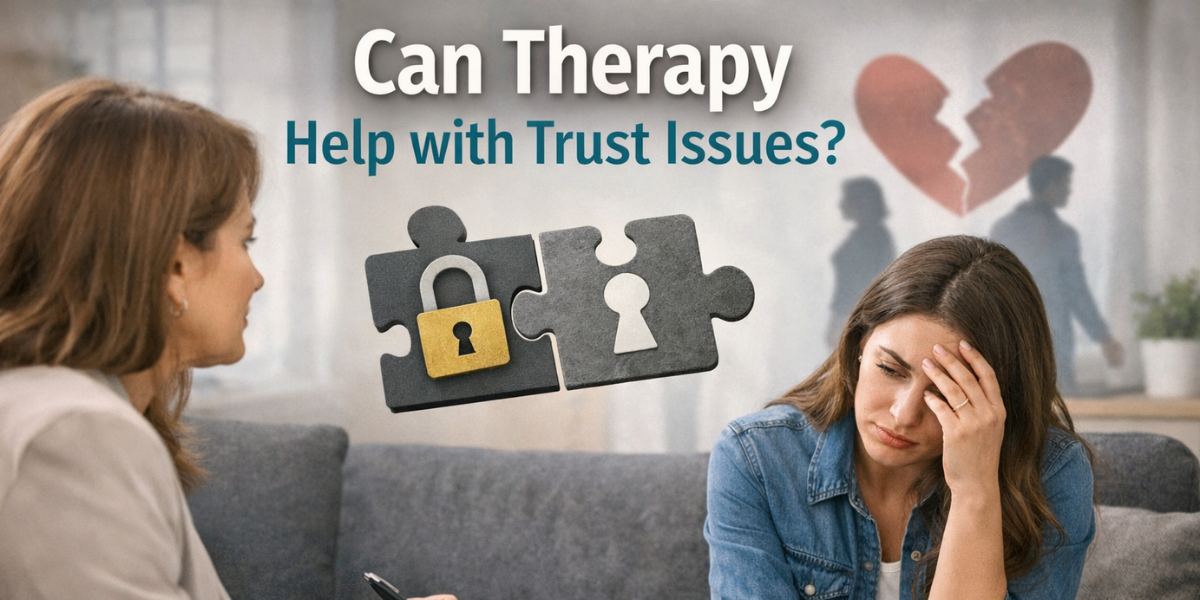
Trust issues therapy helps people rebuild trust with friends, partners, coworkers, and even themselves.
It supports emotional healing and trust when past experiences have made closeness feel unsafe.
Trust problems often create distance. You may want connection but feel guarded at the same time.
Therapy helps you understand why trust feels hard and reminds you that these patterns are not permanent.
“Trust is built when someone is vulnerable and not taken advantage of.” — Brené Brown
Therapy offers emotional safety, steady support, and the confidence to feel secure again.
Trust issues often begin with fear. Fear of being hurt. Fear of being betrayed.
Over time, this fear can show up as overthinking, emotional distance, secrecy, or difficulty relying on others.
If you notice yourself pulling away from relationships that once mattered, trust issues therapy can help you pause and understand what’s happening beneath the surface.
Looking for trust-building therapy near me is often the first sign that you’re ready for change.
A therapist helps you explore where mistrust comes from, identify emotional pain, and create space to stay calmer and more open with others.
In this blog, we’ll walk through how therapy help with trust issues works, why it matters, and how it supports healthier relationships and emotional wellbeing.
What is Distrust and how can therapy overcome it?
Trust issues are ongoing difficulties in believing that others are reliable, honest, emotionally safe, or consistent.
These challenges often go beyond one relationship. They can show up repeatedly across different areas of life.
People experiencing trust problems may:
- Constantly question others’ intentions
- Expect betrayal without clear evidence
- Struggle to open up emotionally
- Test relationships instead of feeling secure
- Avoid closeness to prevent getting hurt
From a psychological perspective, trust issues often develop as protective strategies.
When someone learns that closeness leads to pain, disappointment, or abandonment, the brain chooses safety over connection.
This can happen consciously or subconsciously. Understanding this is an important step toward healing.
Trust issues are not simply sensitivity or overthinking. They are emotional responses shaped by past experiences.
Over time, these responses may begin to harm relationships rather than protect them.
Trust issues therapy offers a supportive way to understand these patterns without judgment.
“The curious paradox is that when I accept myself just as I am, then I can change.” — Carl Rogers
Rather than forcing trust, therapy creates emotional safety. Trust is built gradually through consistency, awareness, and honest communication.
How Trust Issues Therapy Supports Healing
Trust issues therapy is a form of counseling and one of the most effective life coaching techniques for strengthening emotional resilience and emotional intelligence.
On the other hand, trust issues therapy is a form of counseling or one of the best life coaching techniques to strengthen resilience and emotional intelligence.
It focuses on helping individuals feel safer in relationships without pressure or judgement.
Rather than telling someone to “just trust”, therapy creates a supportive environment where fears, expectations, and boundaries can be explored safely and openly.
Through trust issues therapy, individuals are supported in:
- Identifying emotional patterns that make trust feel unsafe
- Exploring past experiences that shaped mistrust
- Understanding behaviors that developed as self-protection
- Recognizing how childhood or relationship wounds still influence current connections
In counseling, trust is rebuilt gradually, not forced. The process emphasizes:
- Emotional safety
- Consistency over time
- Open and honest communication
A therapist helps individuals learn how to:
- Replace fear-based reactions with healthier emotional responses
- Improve communication and emotional awareness
- Express needs clearly without shutting others out
- Set boundaries that protect emotional wellbeing without isolating
As trust issues therapy progresses, people begin to respond rather than react, especially during moments of conflict or emotional intensity.
Over time, this process supports emotional healing and trust, making it easier to build stronger relationships with partners, family members, colleagues, and even oneself.
Counseling does not promise perfect relationships. It helps create connections that feel safer, more balanced, and emotionally fulfilling.
What Causes Trust Issues?
Trust issues rarely come from a single event. In most cases, they develop through repeated experiences and train your mind in such a way so that you feel risky or unsafe while trusting others.
Early Life Experiences
Inconsistent caregiving, broken promises, emotional neglect, or feeling unseen during childhood can shape how a person approaches trust later in life.
When emotional needs are not reliably met, children may grow into adults who expect disappointment.
Relationship Trauma
Infidelity, emotional manipulation, gaslighting, or repeated dishonesty can deeply damage a person’s ability to trust.
Even after the relationship ends, the emotional impact often remains.
Attachment Patterns
People with anxious or avoidant attachment styles may struggle with trust due to fears of abandonment or loss of independence.
These patterns often form early and continue unless addressed.
Mental Health Factors
Anxiety, depression, and low self-esteem can amplify mistrust.
When someone doubts their own worth, they may assume others will eventually reject or hurt them.
Chronic Stress and Survival Responses
In environments where staying guarded was necessary, mistrust becomes a survival skill.
Therapy helps determine whether that skill is still needed or can be safely released.
Can Therapy Help with Trust Issues?
Yes, Therapy helps with trust issues by addressing both emotional and cognitive patterns that keep mistrust in place.
Unlike advice from friends or self-help tips, therapy includes proven techniques to conquer uncertainty and fear and focuses on understanding why trust feels worthless and how to rebuild it gradually.
At the time of therapy, your mentor
- Identifies the emotional roots of mistrust
- Separates past experiences from present relationships
- Reduces fear-based reactions
- Helps rebuild emotional safety step by step
In therapy, trust is not forced or rushed. Instead, it is rebuilt through awareness, emotional regulation, and consistent corrective experiences.
Its purpose is to assist clients in noticing that they feel less reactive, more grounded, and better able to assess who is truly trustworthy.
How Trust Issues Therapy Works
It is a structured and compassionate process that adapts to each individual’s experiences and needs. During your process, a counselor follows the following steps:
Understanding Your Trust History
Therapy begins by exploring relationship patterns, emotional triggers, and past experiences.
This helps identify when and how trust became difficult.
Identifying Core Beliefs
Many people carry beliefs such as “People always leave”, “If I trust, I’ll get hurt”, or “I have to protect myself at all costs”.
Therapy helps bring these beliefs into awareness and examine whether they are still accurate.
Emotional Regulation and Safety
Trust issues are often linked to heightened emotional responses.
Therapy teaches grounding techniques and nervous system regulation so fear no longer controls reactions.
Gradual Trust Rebuilding
Clients learn how to take emotional risks safely, set healthy boundaries, and practice vulnerability without self-blame.
Trust is build again through small, consistent steps rather than dramatic leaps.
“Healing doesn’t mean the damage never existed. It means the damage no longer controls your life.”
Types of Therapy Used for Trust Issues
Different therapeutic approaches support trust-building in different ways. A skilled therapist may combine methods depending on the client’s needs.
Cognitive Behavioral Therapy (CBT)
CBT (Cognitive Behavioural Therapy) sculpts the mind through distorted thinking patterns related to trust.
It concentrates on replacing fear-based assumptions with balanced and realistic perspectives.
Attachment-Based Therapy
This approach explores early relationships and how they shaped emotional expectations.
It is especially effective for long-standing trust problems rooted in childhood.
Trauma-Informed Therapy
When trust issues stem from betrayal or emotional trauma, trauma-informed therapy ensures healing without re-triggering emotional pain.
Relationship Counseling for Trust
When trust issues affect romantic relationships, counseling helps both partners understand the impact of broken trust, rebuild communication, and establish emotional safety together.
How Long Does It Take to Overcome Trust Problems?
The timeline for overcoming trust problems varies.
Factors include the depth of emotional wounds, consistency in therapy, and current support systems.
Some people notice relief within weeks as awareness increases, while deeper trust rebuilding often takes several months.
Long-term change involves ongoing self-reflection and emotional growth even after therapy ends.
It’s important to understand that emotional healing is deeply connected to rebuilding trust.
That is why therapists incorporate logical strategies alongside emotional work because they are rooted in emotional memory and get rid of
- Grief and disappointment
- Shame tied to past experiences
As emotional wounds heal, trusting others becomes less frightening.
People learn to recognize safe relationships while protecting themselves appropriately, rather than avoiding closeness entirely.
Importance of Trust-Building Therapy in Real Life
Trust-building therapy is not about instantly trusting everyone. It is about learning how to assess safety realistically and respond calmly rather than reactively.
After a few days of your treatment, you may notice:
- Less feeling of suspicious without reason
- Easy management of emotional reactions
- Improved communication
- Healthier and clearer boundaries
Progress often happens gradually. Setbacks are normal and part of the healing process.
Therapy provides guidance and support during these moments, preventing old patterns from taking over.
Conclusion
Trust issues are learnt responses shaped by emotional experiences, and what is learnt can be unlearned. This is the power of therapy.
With comprehensive structure, safety measures, and our expertise in personalized therapy and coaching, you can heal emotional wounds and build healthier relationships.
“Trust yourself. You’ve survived a lot, and you’re still here.”
With the right support, trust becomes less about fear and more about confidence, clarity, and emotional security.
Healing takes time, but meaningful change is possible. Trust isn’t about ignoring risk. It’s about learning how to feel safe again.
Rebuild Trust with Professional Support at Crystal Perdue
Research and clinical experience consistently show that structured therapy improves emotional regulation, relationship satisfaction, and long-term well-being.
People who address trust issues early often experience healthier boundaries, deeper connections, and reduced anxiety over time.
If these problems are affecting your relationships or peace of mind, professional support can help you move forward safely and confidently.
At Crystal Perdue, we offer the best trust-building therapy and help you learn how to feel secure again.
Don’t miss this golden opportunity because we have customized approaches to begin your journey toward emotional healing and trust.
Take the first step and schedule a confidential consultation today.
FAQs
Can trust issues be completely cured?
Trust issues are not something that disappear overnight, but they can significantly improve with therapy. Many people learn to trust in healthier, more realistic ways without constant fear. The goal is progress, not perfection. With emotional healing and awareness, trust becomes manageable rather than overwhelming.
Does therapy help after infidelity or betrayal?
Yes, therapy is especially effective after betrayal. It helps process emotional pain, rebuild self-worth, and determine whether trust can be restored. For couples, relationship counseling for trust creates a structured environment for accountability, communication, and repair over time.
Is individual therapy or relationship counseling better for trust issues?
Both can be effective depending on the situation. Individual therapy focuses on personal emotional patterns, while relationship counseling addresses trust within a specific partnership. In some cases, combining both approaches leads to the best outcomes.
Can trust issues return after therapy?
Trust issues can resurface during stressful or triggering situations, but therapy provides tools to manage them effectively. Clients learn how to recognize early signs and respond thoughtfully instead of reverting to old patterns. Awareness helps prevent setbacks from becoming permanent.
What if I don’t know why I don’t trust people?
Many trust issues stem from subconscious experiences or emotional memories. Therapy helps uncover these underlying patterns gently and safely. Even without a clear cause, emotional healing and trust can still be rebuilt through consistent therapeutic work.
Does trust issues therapy help with self-trust too?
Yes, self-trust is often a key part of the process. Therapy helps individuals reconnect with their instincts, emotions, and decision-making abilities. As self-trust improves, trusting others becomes less threatening and more balanced.
When Should You Seek Trust Issues Therapy?
Trust-building therapy may be helpful if mistrust is interfering with your relationships. You experience constant anxiety or suspicion, past betrayals are influencing your current behavior, or your connections become vulnerable. If you’ve searched for “trust-building therapy near me”, it often means you’re ready to explore support that goes beyond self-help strategies.